
Faith Without Easy Answers
The Power of the DogThis thread traces how belief, religious institutions, and acts of care endure alongside doubt, political compromise, and seemingly unanswered suffering.
increasing Bearing strength in each event
 decreasing
Bearing strength in each eventdecreasingA Catholic Among the Dead
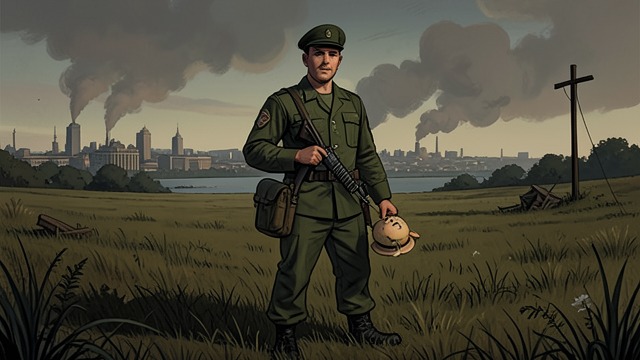
Faith and Violence
The believer's contradiction
Art Keller is a Catholic and a veteran of war who sees villages burned and civilians displaced during Operation Condor. His faith does not keep him outside violence; it sharpens his awareness of what the operation does to ordinary people while leaving him implicated in the machinery that carries it out.
A question of responsibility
He remembers his own history of marking people for death and wonders how a person can live decently inside an indecent world. Religious practice offers him language for guilt, but not a simple way to erase it. The contradiction between belief and action becomes a durable part of his character.
The novel refuses a clean division between righteous believers and immoral institutions. Keller's prayer and his work coexist, and that coexistence is precisely what troubles him. Faith becomes less a certificate of innocence than a demand to look honestly at the human consequences of his choices.
Malverde's Unlikely Petition
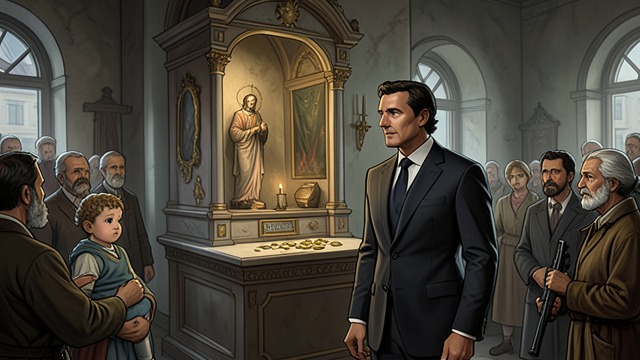
Prayer in a Narco Shrine
A promise made
In Culiacán, Art Keller visits the shrine of Santo Jesús Malverde, a folk saint revered by poor people and traffickers alike. He makes a vow: if the saint helps him bring down the drug operation, Keller will give money to the poor. The prayer is half sincere, half desperate, and he admits that nothing else seems to be working.
Faith within the trade
The shrine's offerings describe favors sought and remembered: protection, healing, escape, or revenge. Its presence shows how religious devotion exists alongside a criminal economy rather than outside it. Adán Barrera and other traffickers inhabit a world where sacred promises and commercial calculation can occupy the same mind.
The episode complicates the idea that religion belongs only to the powerless or morally pure. People ask for help for reasons that may be compassionate, self-serving, or both. Keller's vow does not settle his moral questions; instead, it binds spiritual aspiration to practical action and makes him accountable for what follows.
Parada's Work of Mercy
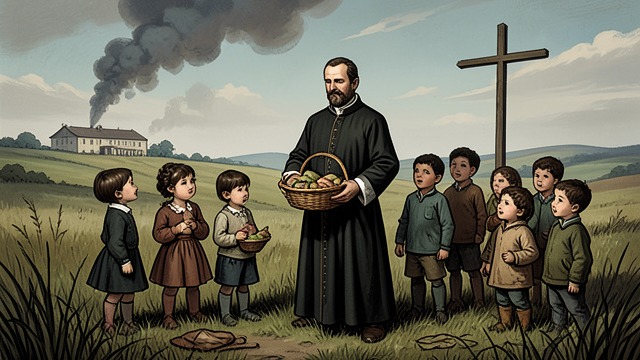
Salvation in Material Form
Relief before doctrine
Bishop Juan Parada helps displaced families with food, medicine, and shelter after villages are burned. He resists the temptation to offer only comforting phrases to children in pain, recognizing that prayer alone cannot treat a wound or feed a family. His religious vocation turns toward concrete care.
An argument over priorities
Parada disputes the Church's institutional leadership, which seeks political advantage and formal recognition from the Mexican government. He insists that the Church should save people in their present lives, not speak only of salvation after death. That conviction grows into a public commitment that makes him a target of both political and ecclesiastical hostility.
His ethic is not presented as an easy answer to structural poverty, but it insists that belief has consequences in the world. The difference between a Church that protects its standing and one that risks it for the vulnerable becomes a central moral divide. Parada's faith is measured by service rather than by doctrinal comfort.
Faith Beside a Broken Child
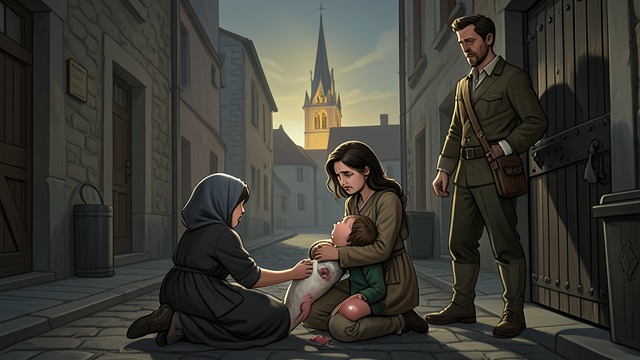
The Limits of Explanation
A parent's question
When Adán Barrera and Lucía learn that their daughter Gloria has cystic lymphangioma, Lucía turns increasingly to prayer while Adán seeks medical answers. They consult specialists and healers across several countries, but each effort returns them to the same uncertainty. Their different forms of hope cannot cure the child.
Love as an answer
Father Juan Parada tells Adán that God's love may be expressed through the father's own love for his daughter. Adán finds the response insufficient, yet his care for Gloria becomes one of the few parts of his life he can regard without evasion. He protects her, spends time with her, and refuses to hide her from public view.
The thread distinguishes faith from certainty. Lucía's devotion does not guarantee a miracle, and Adán's reliance on numbers cannot make suffering intelligible. Their daughter remains loved within an illness neither religion nor science can resolve, exposing the limits of both explanation and control.
The Cardinal's Last Witness
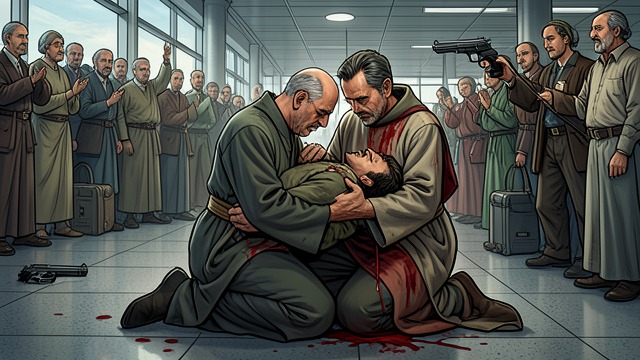
Courage at the Crossing
A mediator's gamble
Bishop Juan Parada tries to bring Adán Barrera and Blondie to a peace meeting, believing that preventing further killing is a moral responsibility even if an agreement might also help criminal businesses. His role places him between armed factions whose assurances carry little weight once the shooting begins.
The cost of intervention
At the airport, Parada tries to reach a wounded young man and confronts Fabián Martínez, who mistakes or treats him as a target. Callan holds the dying priest and hears him offer forgiveness. The scene makes Parada's ethic tangible: he moves toward someone in danger even when doing so cannot guarantee rescue.
Parada's death does not resolve the conflict; instead, it becomes another justification for retaliation and cover stories. Yet the forgiveness he offers affects Callan precisely because it cannot undo the harm. The novel leaves open whether grace can change a killer, but shows that a final act of compassion can remain with him when institutions and bargains fail.
1975, during the destruction of the Sinaloan villages
Early in 1975, before Keller's partnership with Miguel Ángel Barrera
1977, during relief work after Operation Condor
1985 onward, as Gloria's condition becomes clear
1997, during the failed peace summit and airport attack
